
Search
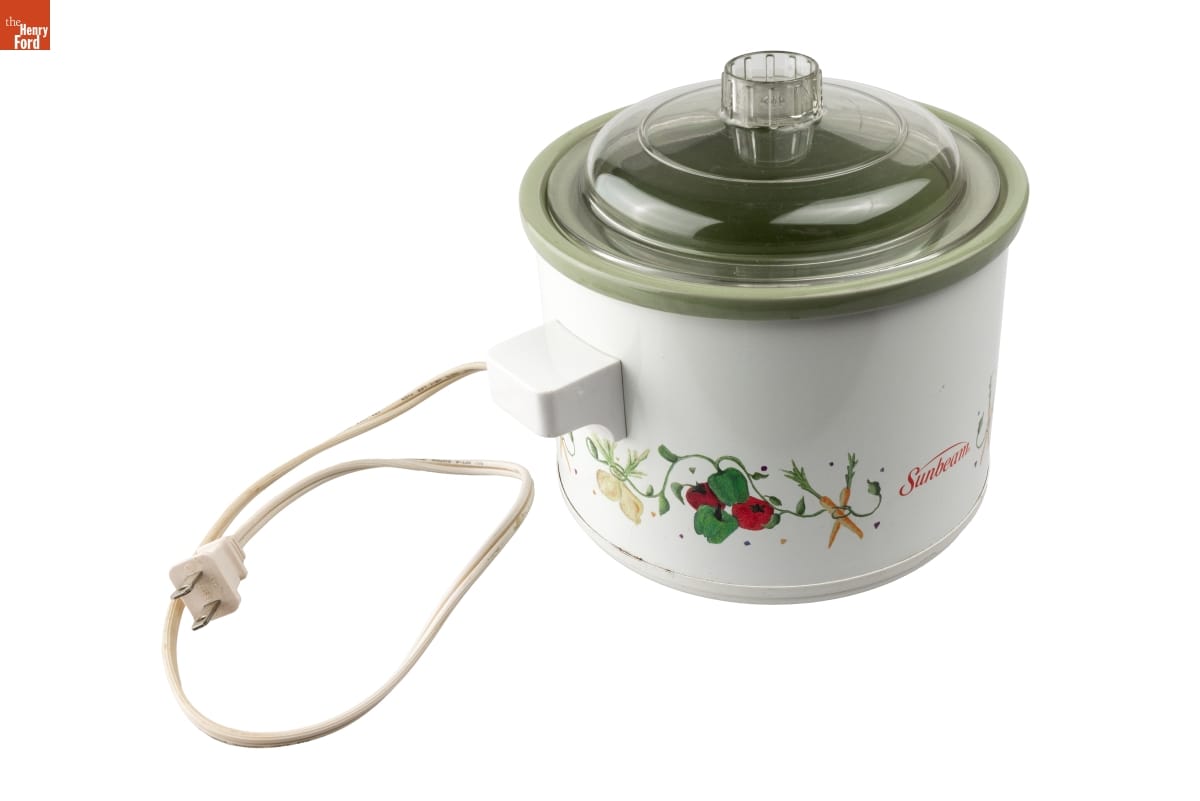
- Sunbeam Slow Cooker Used by the Jackson Family, Selma, Alabama - In 2023, The Henry Ford acquired the Selma, Alabama, home of Dr. Sullivan and Richie Jean Sherrod Jackson, where Dr. Martin Luther King and Civil Rights leaders planned the 1965 Selma-to-Montgomery Voting Rights marches. The acquisition included some materials used by the family after the voting rights struggle. The post-1965 items retained help document Black American middle-class life in the late twentieth century.
- 1980-1989
- Collections - Artifact
Sunbeam Slow Cooker Used by the Jackson Family, Selma, Alabama
In 2023, The Henry Ford acquired the Selma, Alabama, home of Dr. Sullivan and Richie Jean Sherrod Jackson, where Dr. Martin Luther King and Civil Rights leaders planned the 1965 Selma-to-Montgomery Voting Rights marches. The acquisition included some materials used by the family after the voting rights struggle. The post-1965 items retained help document Black American middle-class life in the late twentieth century.
- Crock, 1892-1945 -
- 1892-1945
- Collections - Artifact
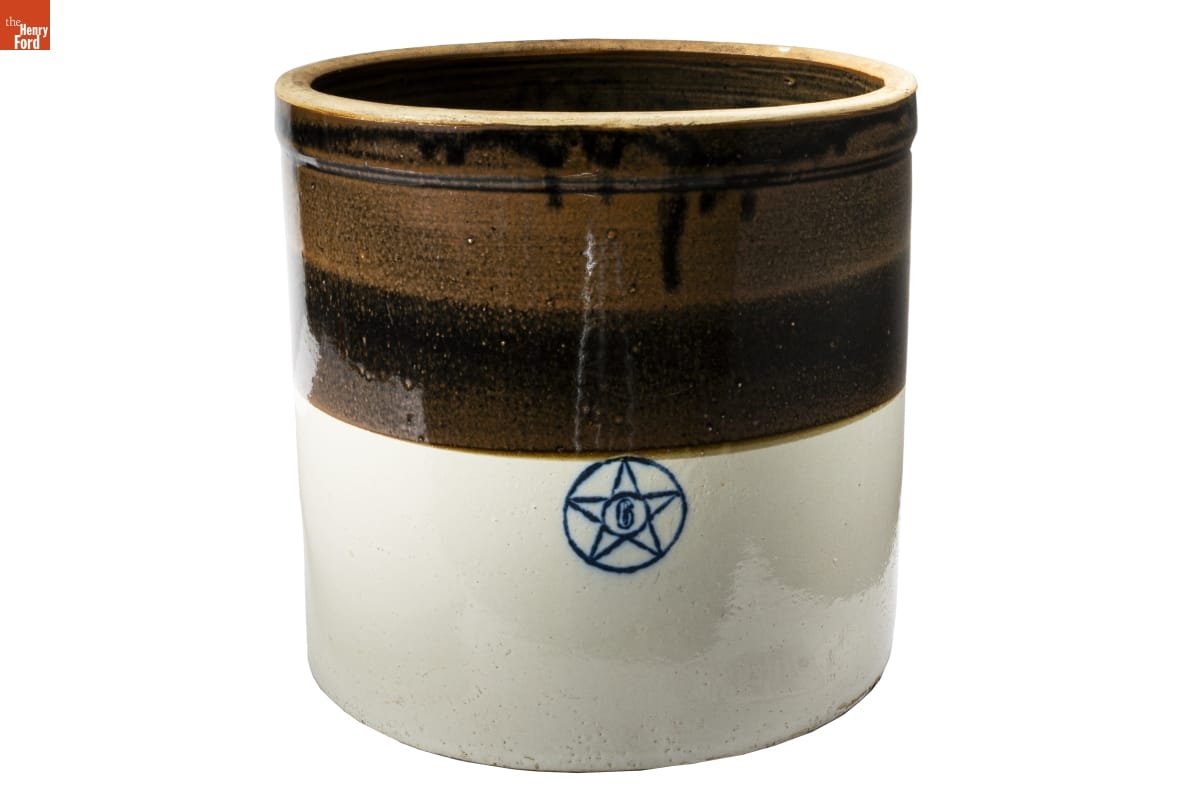
Crock, 1892-1945
- Crock Used by the Jackson Family, Selma, Alabama -
- Collections - Artifact
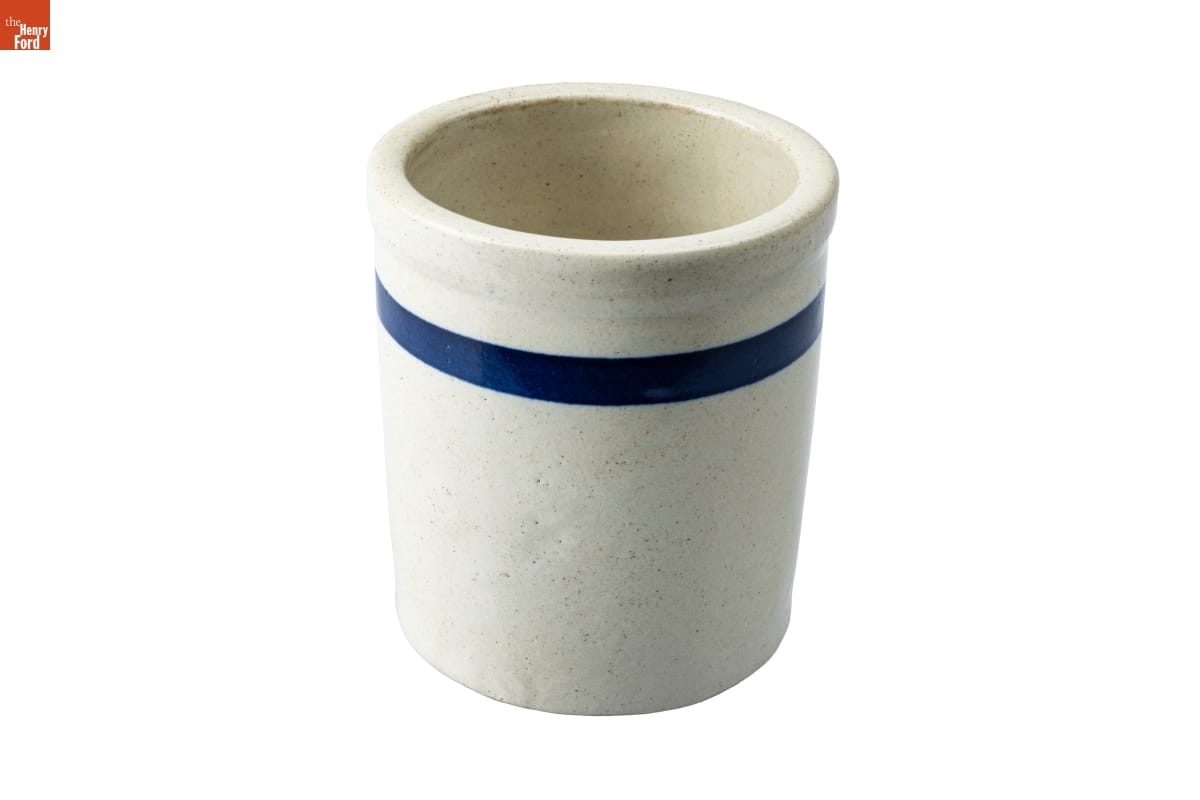
Crock Used by the Jackson Family, Selma, Alabama
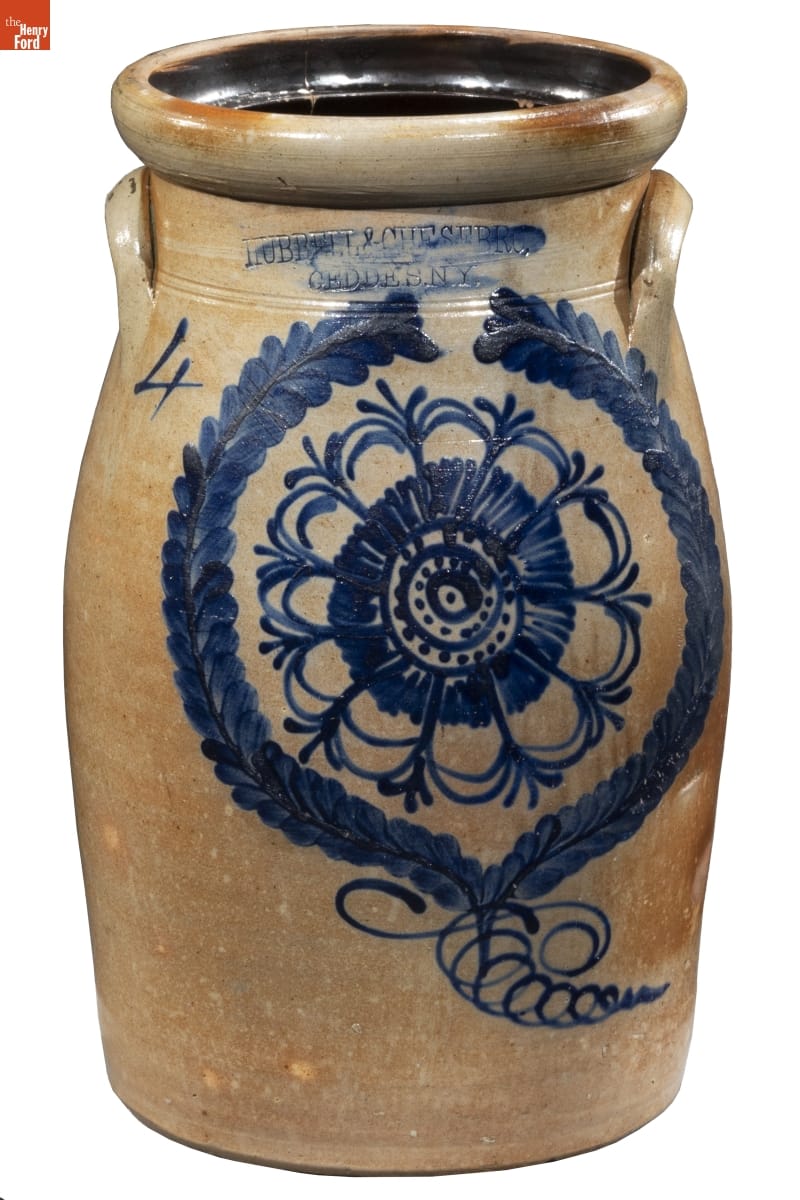
- Churn, 1867-1884 - This 4-gallon butter churn was made of a durable, leak-proof pottery called stoneware, shaped on a potter's wheel. The orange-peel-like outer glaze was created when the potter threw handfuls of common rock salt into a white-hot kiln during the piece's firing. Potters decorated their salt-glazed stoneware pieces with an amazing array of designs, including the stylized flower and laurel wreath on this piece.
- 1867-1884
- Collections - Artifact
Churn, 1867-1884
This 4-gallon butter churn was made of a durable, leak-proof pottery called stoneware, shaped on a potter's wheel. The orange-peel-like outer glaze was created when the potter threw handfuls of common rock salt into a white-hot kiln during the piece's firing. Potters decorated their salt-glazed stoneware pieces with an amazing array of designs, including the stylized flower and laurel wreath on this piece.
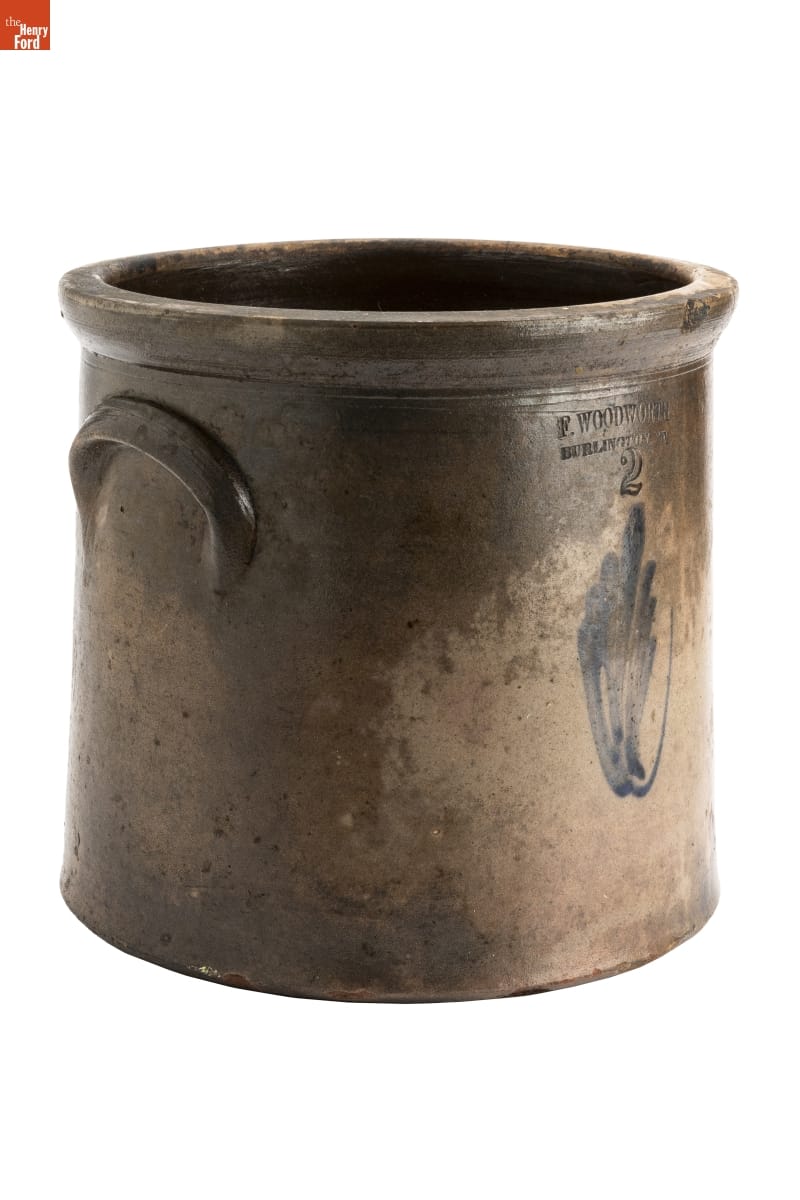
- Crock, 1874-1890 - Franklin Woodworth of Burlington, Vermont, created this 2-gallon crock made of stoneware--a durable, leak-proof pottery--in the late 1800s. Potters usually added decorations, like this blue flower, and impressed their names to promote their products. The orange-peel-like outer glaze was created when the potter threw handfuls of common rock salt into a white-hot kiln during the piece's firing.
- 1874-1890
- Collections - Artifact
Crock, 1874-1890
Franklin Woodworth of Burlington, Vermont, created this 2-gallon crock made of stoneware--a durable, leak-proof pottery--in the late 1800s. Potters usually added decorations, like this blue flower, and impressed their names to promote their products. The orange-peel-like outer glaze was created when the potter threw handfuls of common rock salt into a white-hot kiln during the piece's firing.
- Crock, 1859-1870 -
- 1859-1870
- Collections - Artifact
Crock, 1859-1870
- Crock, 1840-1870 -
- 1840-1870
- Collections - Artifact
Crock, 1840-1870